Your health insurance contributes to the cost.
Aeon proudly partners with health insurance providers. If your insurance does not cover the cost, we will — so you can book your check-up with no financial risk.
:quality(90))
How much will my insurance cover?
Enter your details to receive your estimated coverage and a personalised quote via email.
What our customers say

5


Tine W.
I received 80% reimbursement on my check-up
"I'm glad that I took out a new top-up insurance at the beginning of the year, which allows me to have such check-ups. I was reimbursed 80% of the check-up costs."
5
Timur K.
The KPT Pulse reimbursed 75% of my check-up costs
"It was great that I could claim the check-up as a preventive measure with my insurance. KPT Pulse covered 75% of my check-up costs."
5
Alessandro M.
My top-up insurance paid 80% of my check-up
"I specifically took out a supplementary insurance with Sanitas that supports prevention and preventive care. After the check-up, I was reimbursed 80% of the costs."
What can our blood test give you clarity on?

Energy
“Why do I feel so tired?”
:quality(90))

Metabolism
“Why is it harder for me to maintain my weight?”
:quality(90))

Immunesystem
“Why do I get sick more often?”
:quality(90))
What we measure
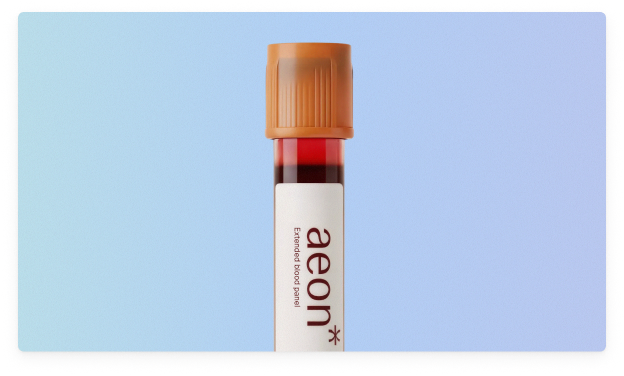
A clinical-level blood test with 75+ biomarkers. It serves to reveal patterns, priorities, and medically meaningful areas of action.
:quality(100))
We evaluate markers associated with long-term risks for cardiovascular diseases and metabolic health.
These include ApoB, LDL C, HDL C, triglycerides, HbA1c, fasting glucose, and hs CRP.
These values help assess whether preventive measures should focus more on lipid metabolism, blood sugar regulation, or inflammatory processes.
We analyze markers related to cellular energy metabolism, oxygen supply, and blood formation. They provide clues to possible medical causes of exhaustion or performance reduction.
These markers provide information about inflammatory processes and the activity of the immune system. They can help classify chronic stress or early immunological changes.
We measure selected markers to assess the status of essential nutrients.
Abnormalities may indicate medically relevant deficiencies that should be further investigated.
These values provide insights into the function of central organs such as the liver, kidneys, and thyroid.
They help detect early functional changes before any symptoms appear.
:quality(100))
:quality(75))
Medical clarity and continued guidance

Specialized doctors review your biomarkers and assess what is medically relevant.

The personal classification takes into account your individual profile based on the medical questionnaire.

Full access to the online portal with a structured report as a basis for informed discussions with your doctor.

If necessary, re-examination to track changes over time and see if measures are effective.

Book your check-up
Easy blood draw

Medical analysis

Results and actionable insights
Book your check-up
Easy blood draw
Medical analysis
Results and actionable insights
Your digital report that goes beyond numbers.
:quality(100))
Our expert team
Our mission is to transform preventive care by using innovative MRI technology and multimodal diagnostics making patient-centered early detection accessible to everyone.
:quality(75))
Tim Seithe
CEO
With over 10 years of experience in the medical industry, Tim Seithe leads our strategic initiatives as CEO, ensuring we remain at the forefront of innovation in preventive healthcare.
:quality(75))
Dr. med. Manuel Puntschuh
CMO
Dr. med. Manuel Puntschuh is Chief Medical Officer and a member of the Leadership Team at Aeon. A board-certified specialist in General Internal Medicine with over 15 years of clinical experience, he is responsible for medical quality and clinical standards at Aeon.
:quality(75))
Roger Hornung
Commercial Director
Roger Hornung is Commercial Director and a member of Aeon’s leadership team. He brings over 20 years of leadership experience in Swiss radiology and diagnostics, including 10 years leading the RIMED Group.
Our medical experts
We are an interdisciplinary team of experienced medical doctors and radiology experts passionately dedicated to providing people with a comprehensive overview of their health.
:quality(75))
Dr. Andreas Lemke
Dr. Andreas Lemke is an MRI physicist and entrepreneur with expertise in imaging AI. He ensures that our imaging technologies are of the highest quality.
:quality(75))
Dr. med. Amine Korchi
Dr. Amine Korchi is a radiologist and entrepreneur. He optimizes our radiological procedures and supports strategic decisions for the future of our medical imaging.
Still Have Questions?
A whole-body MRI scan is a gentle and advanced imaging method that uses magnetic signals and radio waves to create detailed images of your entire body in just one session. This includes areas like the head and brain, neck, chest, abdomen, pelvis, spine, joints, blood vessels, and soft tissues such as muscles, tendons, and ligaments. For more information, check out our blog article "MRI 101".
A whole-body scan can help detect a variety of diseases and abnormalities and derive appropriate treatment recommendations. These include tumor diseases and metastases, inflammations, infections, injuries, vascular changes, aneurysms and neurological diseases (e.g., multiple sclerosis).
A recent study found that MRI screening in adults who did not have any disease symptoms led to clinically relevant findings in about one-third of patients. Of these findings, 2.6% were confirmed by pathology as invasive cancers.
Whole-body MRI is a valuable tool for early cancer detection in individuals with hereditary cancer syndromes, significantly improving their chances of long-term health and survival. In young women with high risk of developping breast cancer, an MRI scan can be a useful addition to regular mammography.
In contrast, other body regions, such as the lungs, are less suitable for a whole-body MRI examination.
Before your MRI scan, let the radiology team know if you have any implants (such as breast or metal implants), a pacemaker, allergies, take medication regularly, or are pregnant. If you experience claustrophobia, it's best to mention it in advance so we can support you accordingly.
Also, be sure to remove any jewelry or metal objects before the scan to ensure everything goes smoothly.
Before your MRI scan, let the radiology team know if you have any implants (such as breast or metal implants), a pacemaker, allergies, take medication regularly, or are pregnant. If you experience claustrophobia, it's best to mention it in advance so we can support you accordingly.
Also, be sure to remove any jewelry or metal objects before the scan to ensure everything goes smoothly.
X-ray, CT, and MRI are different imaging methods, each suited for specific purposes.
- X-ray is a quick and cost-effective option, mainly used to capture bone structures.
- CT scans combine X-rays with computer technology to create detailed cross-sectional images, offering more precision but with higher radiation exposure.
- MRI uses magnetic signals and radio waves to provide exceptionally detailed images of soft tissues, making it ideal for examining organs, muscles, and nerves—without any radiation.
Each method has its strengths, depending on what needs to be examined.
A whole-body MRI as a preventive examination enables the early detection of diseases, which can lead to more effective and less invasive treatments. It offers comprehensive screening and can reveal life-changing, and thus life-saving results. It is a long-term investment in your health that saves you many other examinations.
:quality(75))